If you are trying to choose between North Atlanta suburbs and intown Atlanta for your family, you are probably weighing more than a home search. You are thinking about daily routines, yard space, commute patterns, school options, and what kind of lifestyle will feel right over the next few years. The good news is that both options can work well, but they solve different problems. Here’s how to think through the tradeoffs so you can decide with more confidence.
What this decision really comes down to
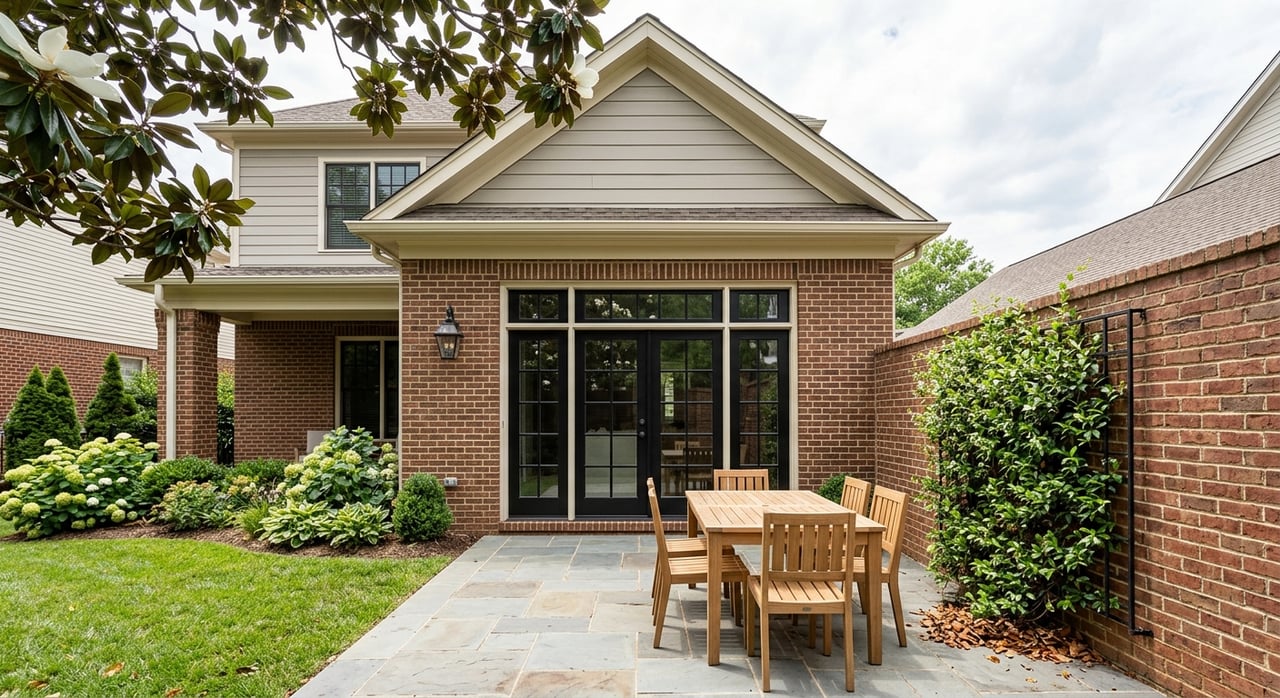
For most families, the choice is less about which area is “better” and more about which lifestyle fits best. North Atlanta suburbs like Alpharetta, Johns Creek, and Roswell often appeal to buyers who want more private outdoor space, larger homes, and a daily routine centered around schools, parks, and driving.
Intown Atlanta often fits families who want easier access to restaurants, parks, museums, entertainment, and rail transit. In many cases, you trade a larger lot for closer access to amenities and a more connected urban feel.
How housing patterns differ
City data shows a clear difference in how these places are built and lived in. Atlanta has a lower owner-occupied housing rate at 46.4%, while Alpharetta is at 65.1%, Johns Creek at 80.4%, and Roswell at 71.9%.
Those numbers help explain why suburban buyers often find more detached homes and more private outdoor space in North Fulton. Atlanta is also denser, at 3,685.7 people per square mile, compared with 2,446.7 in Alpharetta, 2,675.9 in Johns Creek, and 2,279.8 in Roswell.
Household size also points to different living patterns. Atlanta averages 2.00 persons per household, while Alpharetta averages 2.66, Johns Creek 2.82, and Roswell 2.59. The share of residents under 18 is also higher in those suburbs, which reinforces their family-oriented housing pattern.
What that can mean for your day-to-day life
If your ideal week includes backyard play, room to spread out, and a home layout that supports a growing household, the North Atlanta suburbs may feel more natural. These areas tend to align well with buyers who want single-family homes and more separation between home and activity centers.
If you want to step out more often for dining, cultural spots, green space, and city activities, intown Atlanta may be a stronger match. The tradeoff is that your home may sit on a smaller lot or in a denser setting.
North Atlanta suburbs at a glance
Alpharetta
Alpharetta blends suburban housing with a strong amenity base. City planning materials describe Historic Downtown Alpharetta as a premiere destination, and city resources highlight places like the Alpharetta Arts Center, Food Truck Alley, Wills Park, and the Big Creek Greenway.
For families, that can create a nice middle ground. You may get a more suburban home setup while still having access to parks, events, trails, and a defined downtown experience.
Johns Creek
Johns Creek stands out for parks and open space. The city says its park system maintains more than 400 acres, including Cauley Creek Park with 203 acres and a 5K trail, Autrey Mill’s 46-acre preserve with more than three miles of trails, and Shakerag Park with trails and playground areas.
It also shows strong family-living indicators in the Census data. Johns Creek has an owner-occupied housing rate of 80.4%, an average household size of 2.82, and 26.0% of residents under 18.
Roswell
Roswell offers a mix of suburban neighborhoods, park access, and an active cultural scene. The city’s arts division runs the Cultural Arts Center, visual arts programming, festivals, concert series, and historic house museums, while planning around downtown supports shopping and dining in historic Roswell.
That combination can appeal to families who want a more traditional suburban setup without giving up local events and walkable destinations in the core areas.
Intown Atlanta at a glance
Access to culture and dining
Intown Atlanta has a different kind of convenience. The Atlanta BeltLine is a 22-mile corridor connecting 45 neighborhoods, and areas like Midtown and Buckhead offer close access to restaurants, museums, entertainment, and parks.
Discover Atlanta describes Midtown as a major arts district with Piedmont Park, the Atlanta Botanical Garden, the Fox Theatre, and the High Museum nearby. Buckhead adds shopping, museums, theaters, and a wide range of dining options.
Transit can change the routine
For some families, transit access is a meaningful advantage. Midtown and Buckhead sit on MARTA’s rail system, and station information shows travel times to Five Points of about 20 minutes from Midtown and 32 minutes from Buckhead.
That does not mean every intown family will rely on transit every day. It does mean some households may reduce car dependence for parts of the week, especially when work, events, or regular activities line up with the rail network.
Commute times may be closer than you expect
A lot of buyers assume suburban living always means a much longer commute. Citywide resident averages tell a more nuanced story. Average commute times are 26.5 minutes in Atlanta, 26.3 in Alpharetta, 26.9 in Roswell, and 30.1 in Johns Creek.
Those are broad resident averages, not travel times to one specific office. In real life, your commute depends much more on where you work and how often you need to be there.
ARC’s 2025 commuter survey found average commute times were five minutes shorter than in 2019, and telework and hybrid schedules continue to reshape travel patterns. If you only go into the office a few times a week, your home search may have more flexibility than it would have a few years ago.
School systems and choice options
For many families, school structure is a major part of this decision. The key point is that both intown Atlanta and North Fulton suburbs offer school-choice pathways, but they work differently.
Fulton County Schools serves Alpharetta, Johns Creek, and Roswell. The district says it is Georgia’s fourth largest, with projected 2025 to 2026 enrollment of 86,031 students across 102 schools, including seven startup charter organizations and one virtual school.
The district also states that families can explore charter schools, magnet programs, CTAE pathways, and transfer options. Johns Creek’s city schools page notes that residents are served by 11 Fulton County elementary schools, four middle schools, and multiple high school options, along with charter and private options.
APS serves the City of Atlanta. APS is organized into nine high school clusters and operates as a charter system, with school-choice and lottery processes for zoned and out-of-zone requests.
Some individual schools in the suburban cities highlight specialized offerings. Alpharetta High notes International Baccalaureate, AP, dual enrollment, and CTAE pathways, while Roswell High highlights academics, STEM, fine arts, and career and technical education.
Price is not as simple as city versus suburbs
Many buyers expect the suburbs to be less expensive just because they sit farther from the urban core. Current citywide median owner-occupied home values suggest that is not always the case.
Atlanta’s citywide median owner-occupied home value is $439,600. By comparison, Alpharetta is $649,000, Johns Creek is $629,400, and Roswell is $567,100.
That does not mean every intown option is less expensive or every suburban option is more expensive. It does mean you should avoid broad assumptions and compare specific neighborhoods, property types, and lifestyle priorities side by side.
Which option fits your family best?
North Atlanta suburbs may be the better fit if you want:
- More private outdoor space
- A higher likelihood of single-family home options
- A routine centered on parks, schools, and driving
- More room for a larger household
- Suburban amenities paired with neighborhood-based living
Intown Atlanta may be the better fit if you want:
- Closer access to dining and entertainment
- More immediate access to museums, arts, and major parks
- MARTA rail access in areas like Midtown and Buckhead
- A denser, more connected urban environment
- A lifestyle that puts more activities closer to home
A practical way to decide
If you are torn between both, start with your real weekly routine instead of your idealized one. Think about where you work, how often you commute, how much outdoor space you actually want to maintain, and whether you spend more time seeking quiet at home or heading out to parks, restaurants, and events.
Then compare neighborhoods through that lens. The right answer is usually the place that makes your normal Tuesday easier, not just your occasional Saturday more exciting.
If you are planning a move in North Atlanta and want help narrowing your options, the Frye Team can help you compare communities, home styles, and day-to-day fit with clear local guidance.
FAQs
Which area around Atlanta usually offers more yard space for families?
- North Atlanta suburbs like Alpharetta, Johns Creek, and Roswell usually offer more private outdoor space, based on their lower density and higher owner-occupancy patterns compared with Atlanta.
Which area usually has better access to dining and cultural attractions in Atlanta?
- Intown Atlanta usually offers stronger access to dining, museums, entertainment, and parks, especially in areas tied to Midtown, Buckhead, and the BeltLine.
Are commute times from North Atlanta suburbs much longer than intown Atlanta?
- Not always. Resident average commute times are relatively close across Atlanta, Alpharetta, and Roswell, with Johns Creek somewhat higher, so your actual workplace location matters more than a simple suburb-versus-city label.
How do school-choice options differ between Atlanta and North Fulton suburbs?
- Fulton County Schools serves Alpharetta, Johns Creek, and Roswell with charter, magnet, CTAE, and transfer options, while Atlanta Public Schools uses high school clusters and school-choice or lottery processes for certain placements.
Is intown Atlanta always more expensive than North Atlanta suburbs?
- No. Citywide median owner-occupied home values are lower in Atlanta than in Alpharetta, Johns Creek, and Roswell, although the right comparison still depends on the neighborhood and housing type.